









BIOCHEMISTRY

OF

AGING

Aging is the slow accumulation of molecular damage + weakening repair systems + rising inflammation.

Everything starts feeding on itself, like a snowball rolling downhill.
Genetics set the basic speed, but lifestyle can alter the pace.
These changes don’t happen in isolation—they’re all connected.
Fixing one area (like reducing inflammation or boosting cell cleanup)
can often help several others.

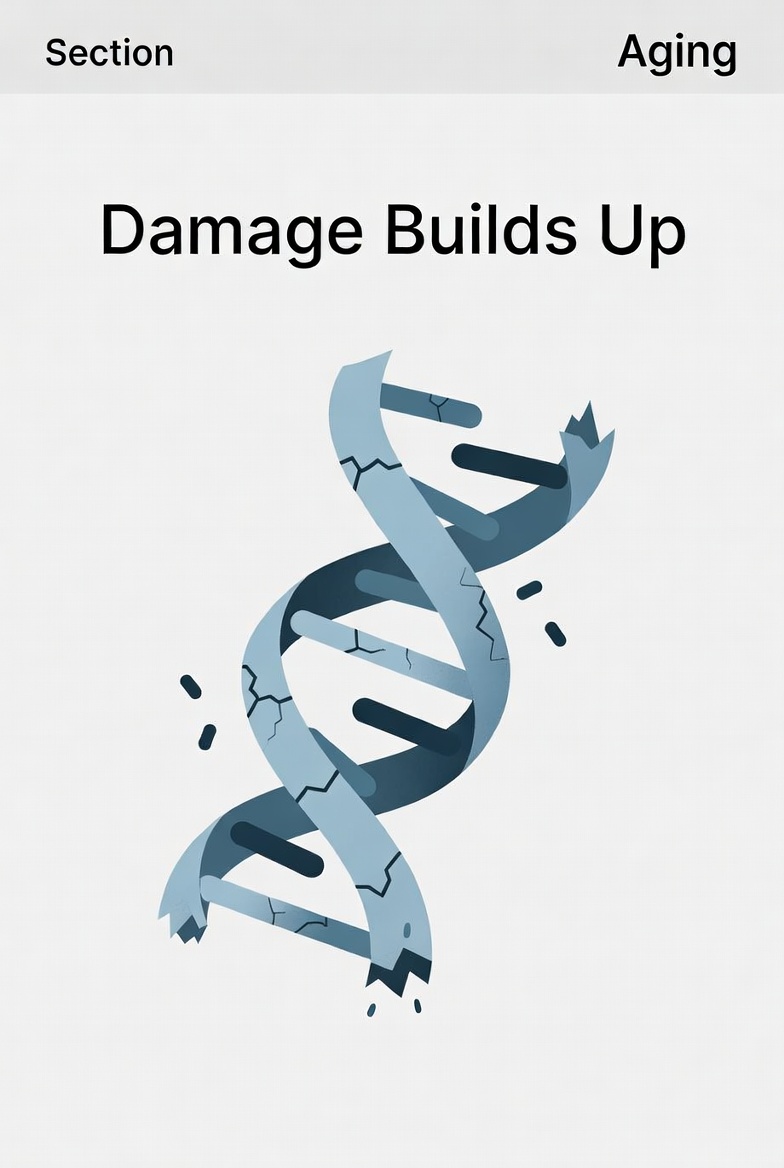
Damage builds up inside our cells
* DNA gets messed up: Our genetic code gets hit by everyday wear-and-tear (like radiation from the sun, pollution, or even normal cell processes). The repair systems get sloppy, so errors pile up.
* Protective chromosome ends wear down: Like the plastic tips on shoelaces, the ends of our chromosomes (called telomeres) shorten every time a cell divides. Eventually, cells stop dividing properly.
* Epigenetic "switches" go wrong: These are chemical tags that turn genes on or off without changing the DNA itself. They drift out of place, so cells start reading the wrong instructions.
* Proteins misbehave: Cells have trouble folding new proteins correctly and clearing out old, damaged ones. Clumps of junk proteins start to form (like in Alzheimer’s).

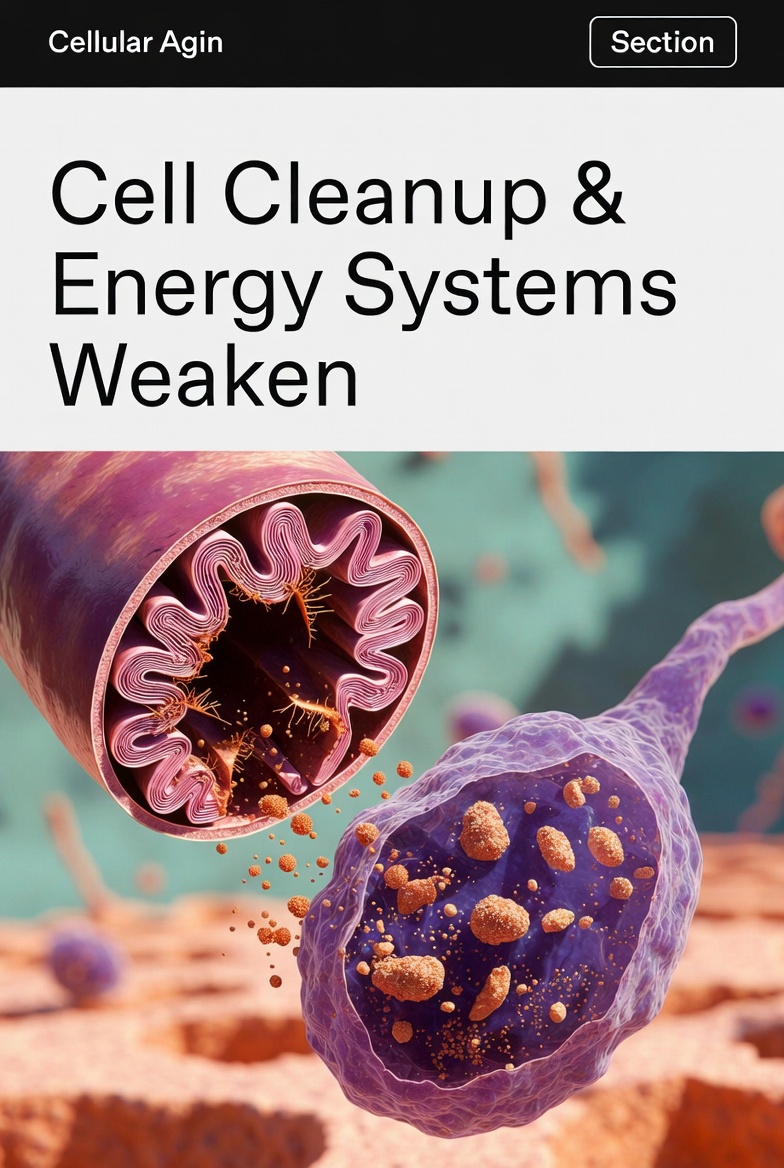
Cell "cleanup" and energy systems weaken
* Recycling system slows down: Cells have a garbage disposal (autophagy) that eats up broken parts. It gets less efficient, so junk piles up.
* Power plants (mitochondria) fail: The tiny engines in cells that make energy start leaking harmful molecules (ROS – basically cell-damaging rust). This creates more damage in a vicious cycle.
* Cells become "zombie" cells: Some damaged cells stop dividing but don’t die. They hang around and release inflammatory chemicals that harm neighboring cells.

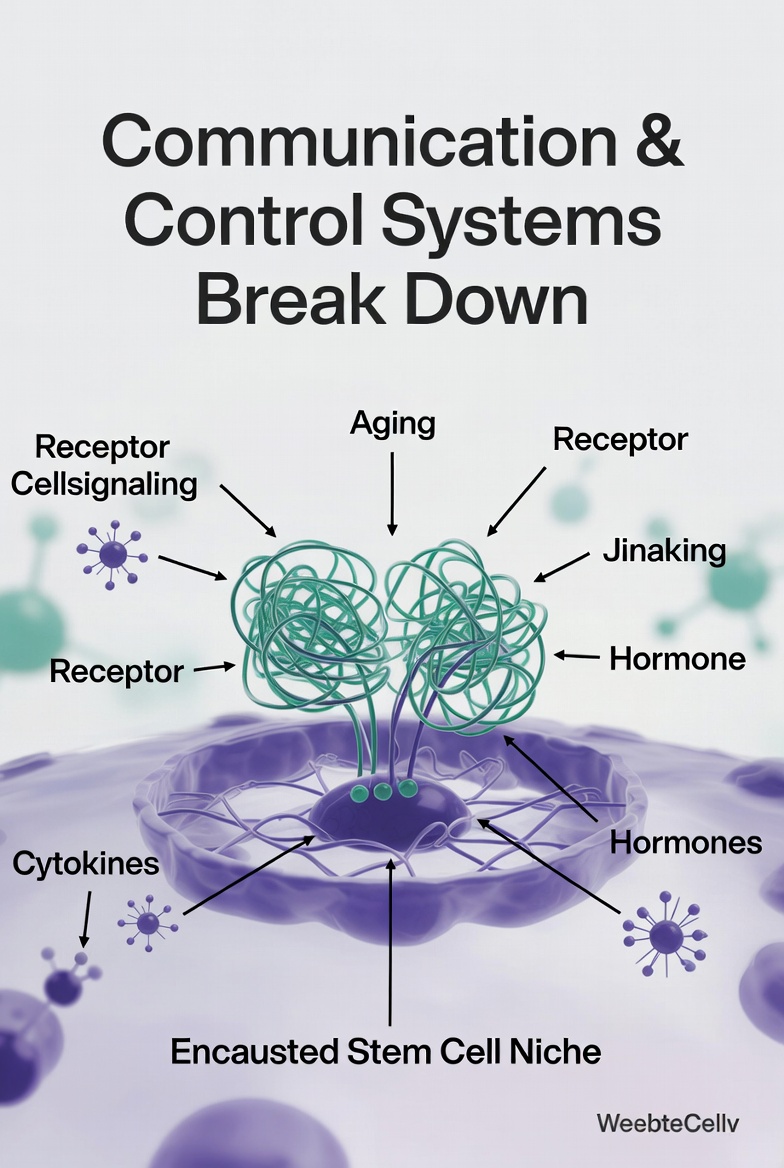
Communication and control systems break down
* Nutrient sensors get confused: The body’s “fuel gauges” (like insulin and mTOR pathways) stop working well, so metabolism goes haywire – cells don’t know when to grow, repair, or rest.
* Chronic low-grade inflammation: The immune system stays mildly “on” all the time (“inflammaging”). It’s like a smoke alarm that never stops beeping.
* Cells stop talking to each other properly: Hormone signals, immune messages, and other communication get scrambled.
* Stem cells get tired: The repair crews (stem cells) that regenerate tissues run out or lose their power.

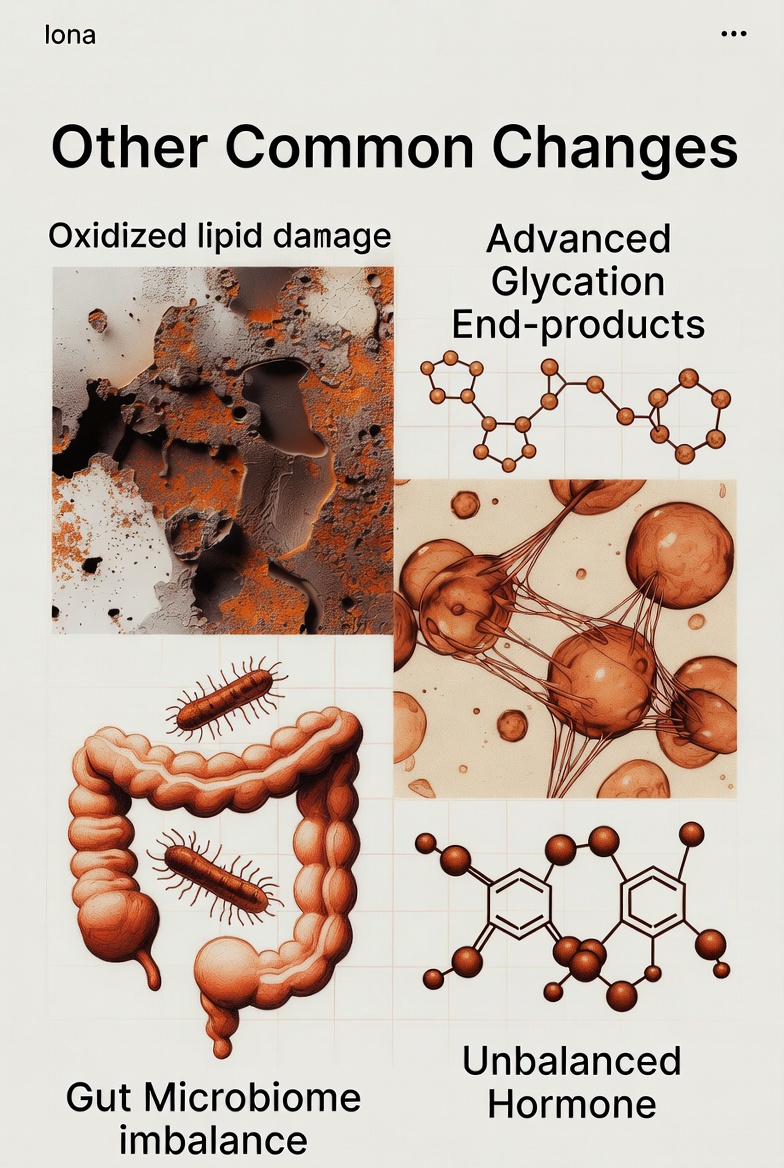
Other common changes
* Oxidative stress: Too much “rusting” from oxygen byproducts damages fats, proteins, and DNA.
* Waste products accumulate: Things like AGEs (sticky sugar-damaged proteins) make tissues stiff (think wrinkles or hardened arteries).
* Microbiome shifts: The good bacteria in your gut change, which affects digestion, immunity, and even mood.
* Hormones drop or become unbalanced: Lower sex hormones, growth hormone, etc.

Niel Young

Old Man

Old man, look at my life
I’m a lot like you were”...
I’ve been first and last
Look at how the time goes past/ But I’m all alone at last

“It’s hard to do it now. It’s like, ‘Old man take a look at my life, I’m a lot like I am.’”

BRUCE SPRINGSTEEN

Reflection

On the accumulating weight of life: “All I do know is as we age the weight of our unsorted baggage becomes heavier… much heavier."

With each passing year, the price of our refusal to do that sorting rises higher and higher.”

Patti smith

Memoir: M Train

Patti Smith offers one of the most vivid “sudden realization” moments in her 2015 memoir M Train (written around age 66–68):“How did we get so damn old? I say to my joints, my iron-colored hair. Now I am older than my love, my departed friends.”

Check out these other sites:

Reflections, quotations, and commentary about death and dying—from philosophers, writers, musicians and thoughtful people.

Thoughts on Dying

"The malaise of dying is a shuffle into deeper water, ultimately reaching chin level. You are enveloped in the certain outcome of the coming steps."

SOUNDTRACK FOR LIFE’S FADE OUT

"Music you long to hear as death approaches. A song, should it ease or catapult you into what's next.

Primary Hallmarks (Direct Causes of Cellular Damage)

* Genomic Instability: Accumulation of DNA damage from endogenous (e.g., reactive oxygen species/ROS) and exogenous sources, including mutations, deletions, chromosomal rearrangements, and impaired DNA repair mechanisms. This leads to errors in genetic information over time.

* Telomere Attrition: Progressive shortening of telomeres (protective caps on chromosome ends) with each cell division, eventually triggering DNA damage responses, replicative senescence, or cell death. Telomerase activity often declines.

* Epigenetic Alterations: Changes in DNA methylation patterns (often global hypomethylation with site-specific hypermethylation), histone modifications (e.g., altered acetylation/methylation), and chromatin remodeling. This causes "epigenetic drift," dysregulating gene expression without altering the DNA sequence.

* Loss of Proteostasis: Decline in the systems maintaining protein quality control, including chaperone-mediated folding, ubiquitin-proteasome degradation, and autophagy. Results in accumulation of misfolded, aggregated, or damaged proteins (e.g., amyloid-like aggregates).

* Disabled Macroautophagy: Reduced efficiency of autophagy (cellular "recycling" of damaged organelles and proteins via lysosomes). This exacerbates buildup of cellular debris and dysfunctional components.

Antagonistic Hallmarks (Stress Responses That Become Detrimental)

* Deregulated Nutrient Sensing: Alterations in pathways like insulin/IGF-1, mTOR, AMPK, and sirtuins. Cells become less responsive to nutrient availability, leading to metabolic dysregulation, excessive anabolism, or impaired stress resistance.

* Mitochondrial Dysfunction: Impaired electron transport chain function, reduced ATP production, increased ROS leakage, mitochondrial DNA mutations, and altered dynamics (fission/fusion/biogenesis). This creates a vicious cycle of oxidative damage.

* Cellular Senescence: Irreversible cell cycle arrest (often triggered by DNA damage or telomere shortening) with a senescence-associated secretory phenotype (SASP). Senescent cells secrete pro-inflammatory cytokines, proteases, and growth factors.

Antagonistic Hallmarks (Stress Responses That Become Detrimental)

* Deregulated Nutrient Sensing: Alterations in pathways like insulin/IGF-1, mTOR, AMPK, and sirtuins. Cells become less responsive to nutrient availability, leading to metabolic dysregulation, excessive anabolism, or impaired stress resistance.

* Mitochondrial Dysfunction: Impaired electron transport chain function, reduced ATP production, increased ROS leakage, mitochondrial DNA mutations, and altered dynamics (fission/fusion/biogenesis). This creates a vicious cycle of oxidative damage.

* Cellular Senescence: Irreversible cell cycle arrest (often triggered by DNA damage or telomere shortening) with a senescence-associated secretory phenotype (SASP). Senescent cells secrete pro-inflammatory cytokines, proteases, and growth factors.

Additional Biochemical Changes Often Observed

These overlap with or result from the hallmarks above:

* Increased Oxidative Stress: Elevated ROS and reduced antioxidant defenses (e.g., superoxide dismutase, glutathione), leading to damage to lipids (peroxidation), proteins (carbonylation), and nucleic acids.

* Metabolic Shifts: Reduced basal metabolic rate, impaired glucose tolerance/insulin sensitivity, altered lipid metabolism (e.g., increased free fatty acids, ectopic fat), and changes in one-carbon metabolism or NAD+ levels.

* Accumulation of Waste Products: Lipofuscin (age pigment from oxidized lipids/proteins), advanced glycation end-products (AGEs) causing cross-linking in tissues, and other post-translational modifications.

* Hormonal and Immune Changes: Declines in anabolic hormones (e.g., growth hormone, sex steroids), thymic involution, shift toward myeloid-biased hematopoiesis, and chronic low-grade immune activation.

* Extracellular Matrix Changes: Increased stiffness from collagen cross-linking, elastin fragmentation, and altered proteoglycan composition.